
Parents want to help but don’t know how
In China, people born in the 1970s and 80s grew up with almost no formal sex education. Now they are the parents.
The barrier isn’t unwillingness. Parents lack confidence, vocabulary and a sense of when to bring it up. Teachers face the same limits and have unclear responsibilities.
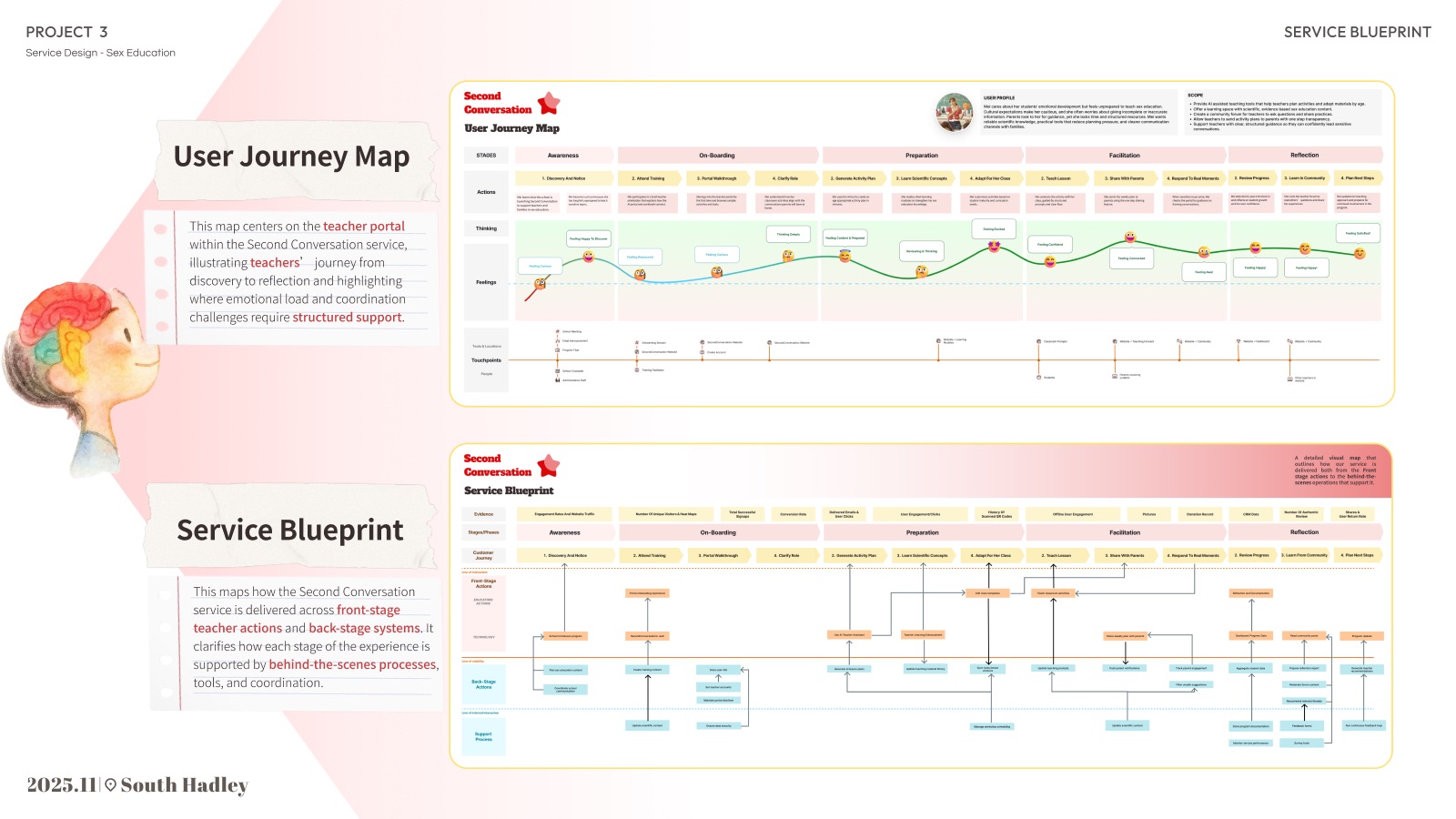
Teachers turned out to coordinate the whole system
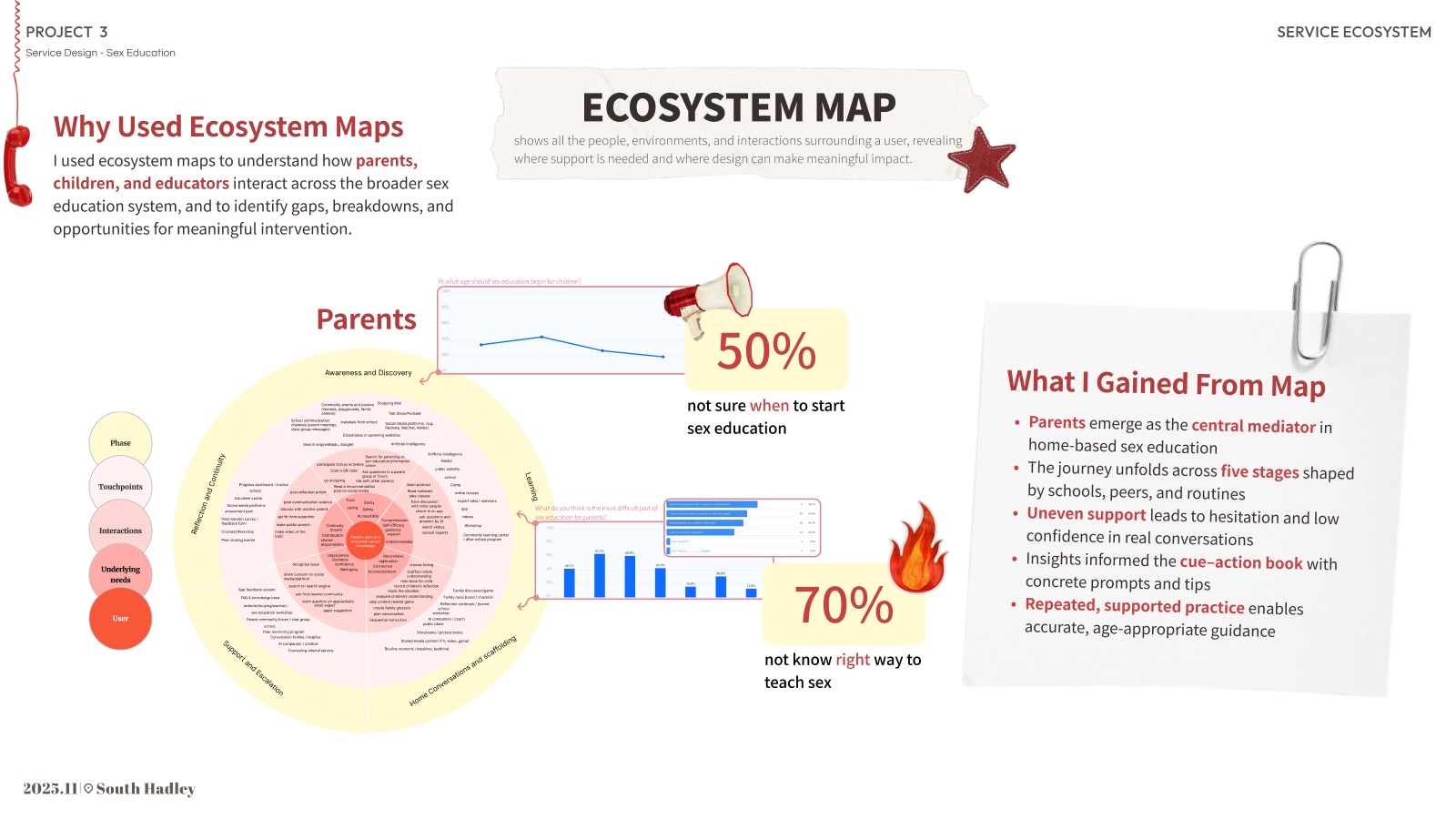
I surveyed 236 people and mapped the ecosystem around parents, children and educators. Teachers connect school policy, classroom learning and what happens at home, and they carry a heavy cognitive and emotional load doing it.
This shaped the main service decision: one platform with portals for teachers, parents and students, with the teacher portal as the control center.
Designed with the people who would use it
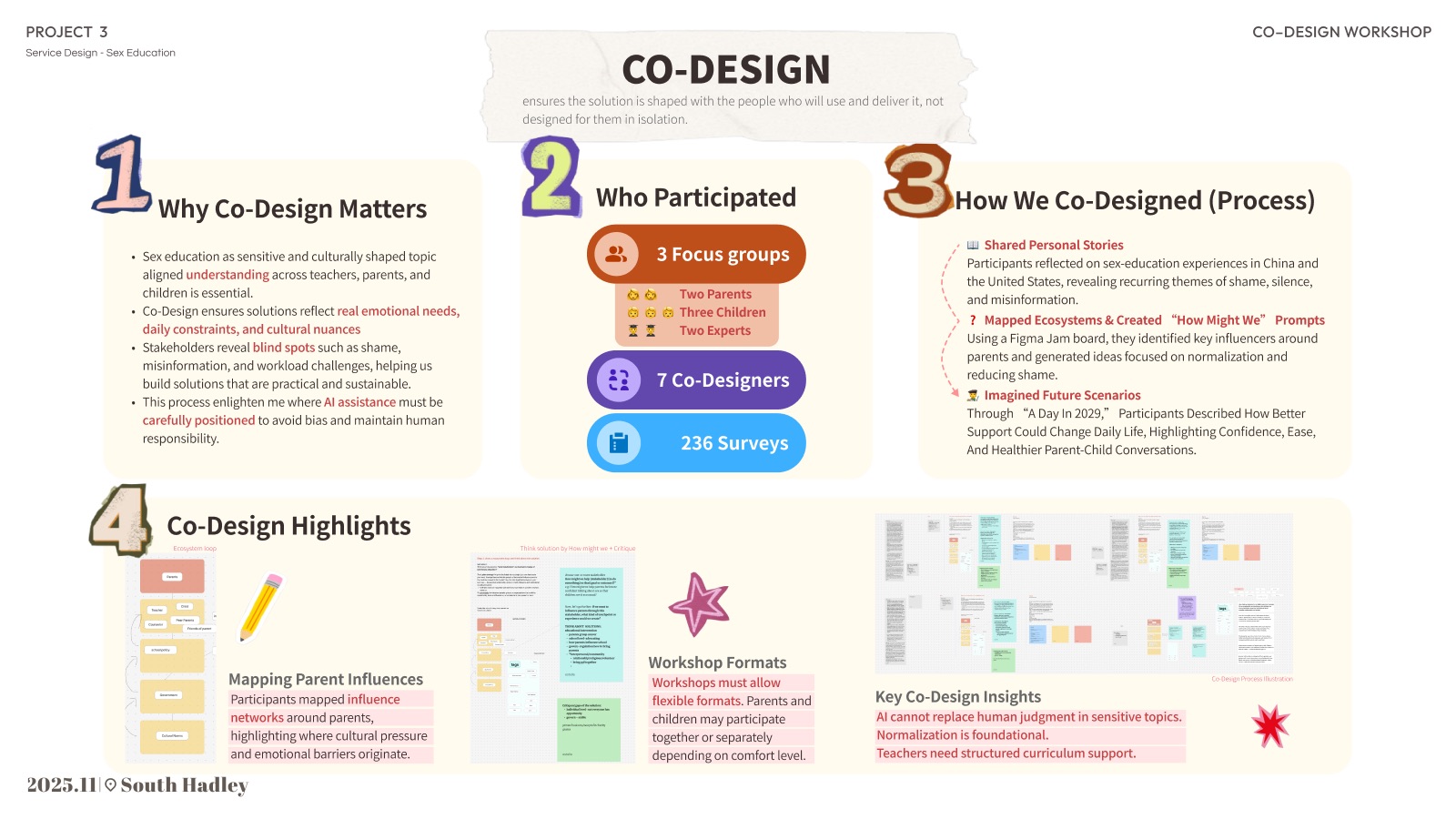
I ran three focus groups with seven co-designers: two parents, three children and two experts. Participants shared personal stories, mapped who influences parents, and imagined “A Day in 2029” with better support.
Normalization comes first
Shame and silence must be reduced before any tool can help.
Teachers need structure
Ready-made curriculum support lowers their load.
AI assists, people decide
On sensitive topics, AI should support planning, never make the final call.
A continuous loop between school and home
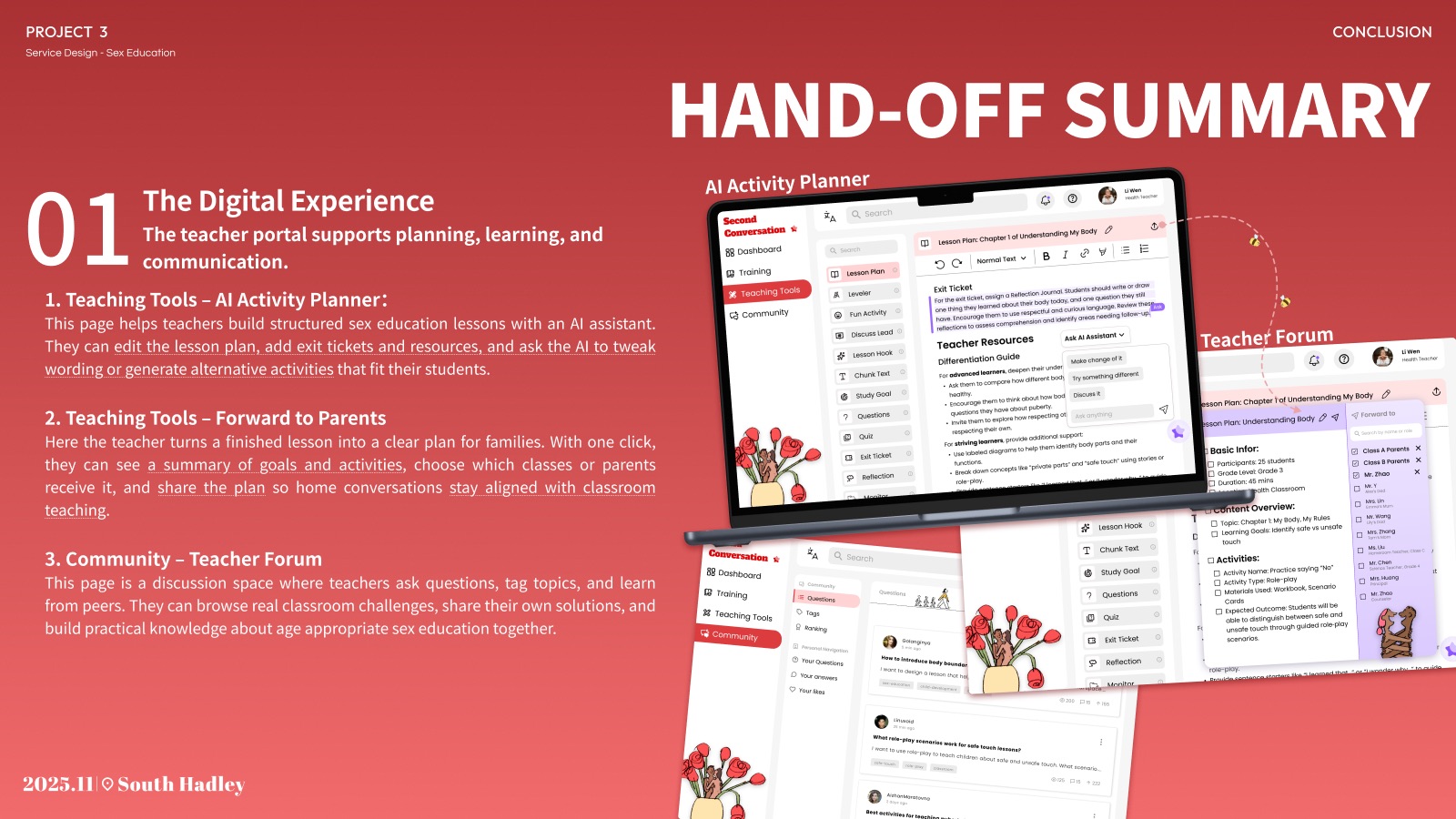
Teacher portal
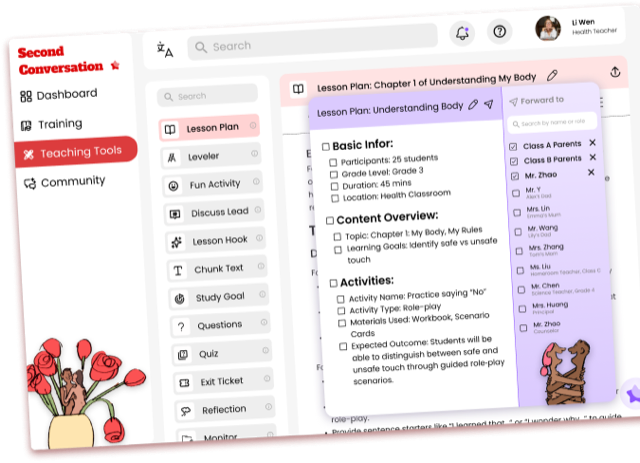
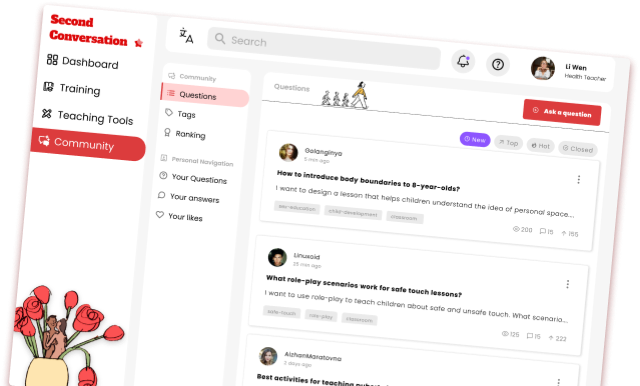
An AI activity planner for building lessons, a one-click way to send lesson plans to parents, and a forum for teachers to share classroom challenges.
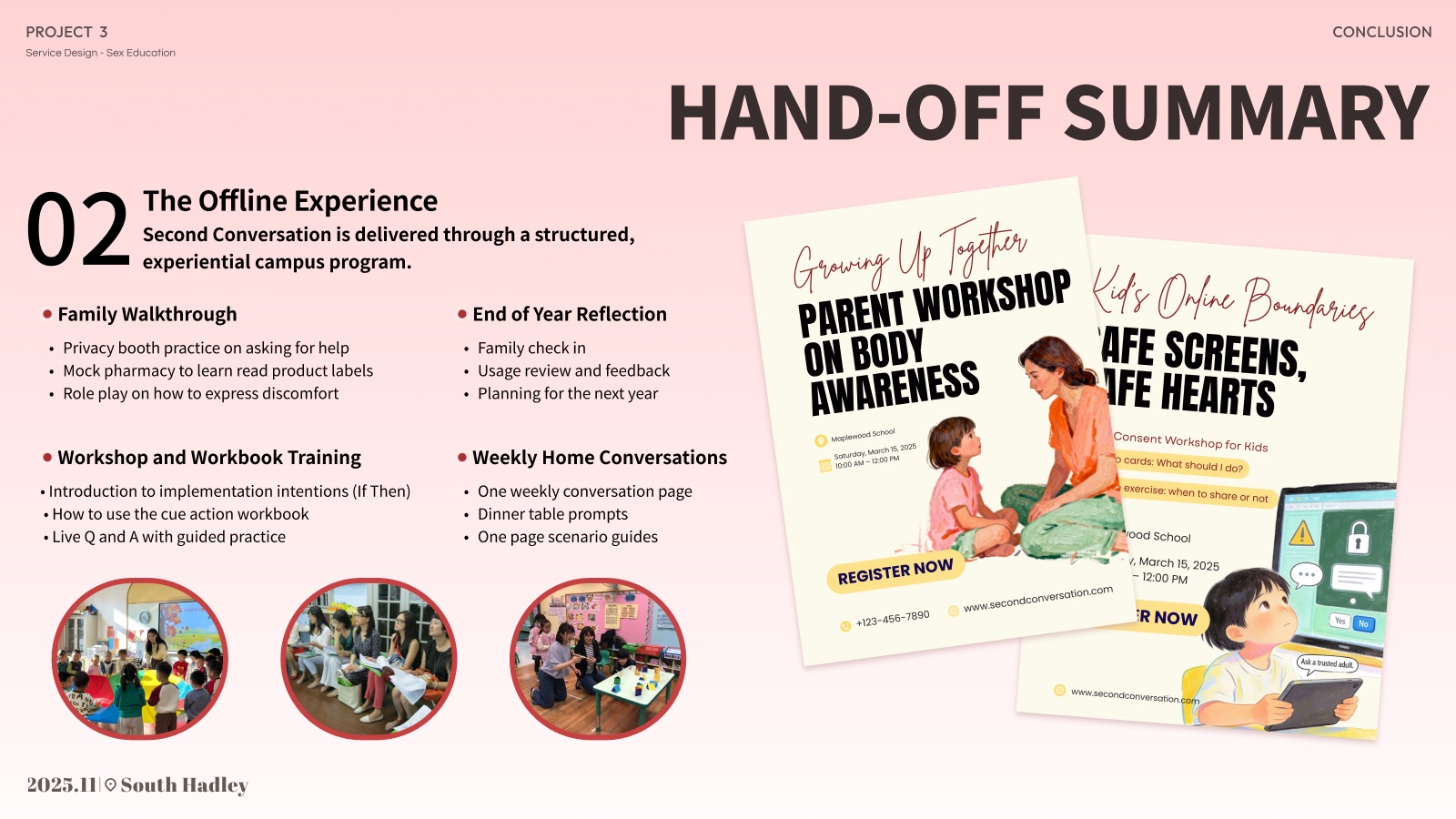
Cue–action workbook
Weekly “if–then” prompts and dinner-table scenarios that make conversations part of everyday life.
Family walkthroughs
Hands-on practice: a privacy booth for asking for help, a mock pharmacy for reading labels, and role-play for saying no.
What I learned
Fragmented support makes people hesitate, and the conversations stop. Concrete tools such as cue–action prompts and shared lesson plans turn a vague responsibility into clear next steps. Trust depends on human judgment, repeated practice, and school and home staying in sync.
Next: pilot the service with one school for a full academic year to measure adoption, teacher workload and parent engagement, then adapt the content to each age group.